
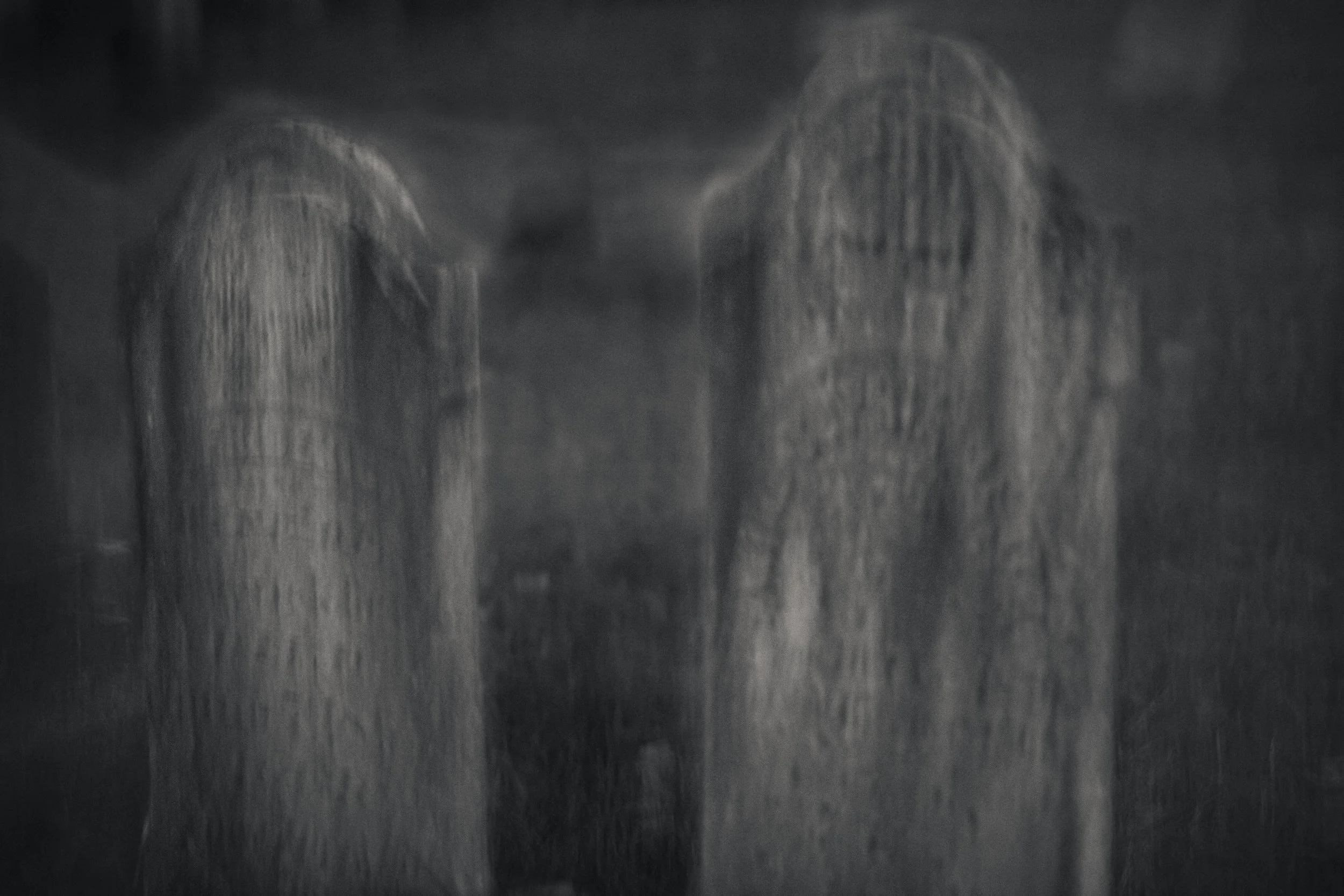
Twin 1860s headstones with chiseled willow tree reliefs blur during a long camera exposure in a Victorian cemetery.
Canon EOS 6D Mark II
Canon EF100mm Macro f2.8 L USM
Godox Speedlight V1 Pro
Manfrotto Tripod
Photography technique is an exercise in complete control: setting aperture and ISO, locking the ball head, leveling the plane, dialing in focus, setting the shutter speed, and eliminating micro-vibrations to achieve edge-to-edge optical sharpness. For every single shot.
Then there are the frames where physical reality intervenes.
During an autumn shoot documenting a 19th-century cemetery, an accidental bump against the tripod shifted the camera downward midway through a long exposure. In high-resolution documentary work, that bump is almost always an immediate delete—a frame ruined by motion blur.
Yet reviewing the file in Lightroom revealed something completely different.
The vertical drop didn’t destroy the composition; it executed an organic motion streak. The crisp 1860s weeping willow relief carvings caught just enough balance between my off-camera speedlight and the setting sun to leave clean highlight crests on top, while the weathered epitaphs below dissolved into graphite strokes. Instead of a discard, it became a hero.
Precision and technical discipline are non-negotiable foundations in any craft. But rigorous execution also requires recognizing when an unintended variable delivers a creative breakthrough that planning alone could never manufacture.
Embrace the mistakes that lead to genuine discovery.
